



NEXT
Pyricularia control in rice: the biological strategy matching chemical efficacy
The intensification of almond farming in Spain has boosted profitability and mechanization, while also increasing the incidence of difficult-to-manage diseases. Among these, controlling Xanthomonas in almond orchards has emerged as a top priority.
Designing an effective program to control Xanthomonas in almonds requires first understanding this bacterium’s biology and its close dependence on environmental conditions. During winter dormancy, the pathogen survives latently in buds, leaf scars, bark crevices, and woody cankers.
When spring rains arrive and temperatures climb to an optimal range of 20 to 25 °C accompanied by prolonged leaf wetness lasting more than 8 to 10 hours, the bacterium multiplies rapidly. Water splash and wind disperse the inoculum, which enters plant tissues through natural openings such as stomata or takes advantage of micro-wounds caused by frost, hail, or mechanical operations.
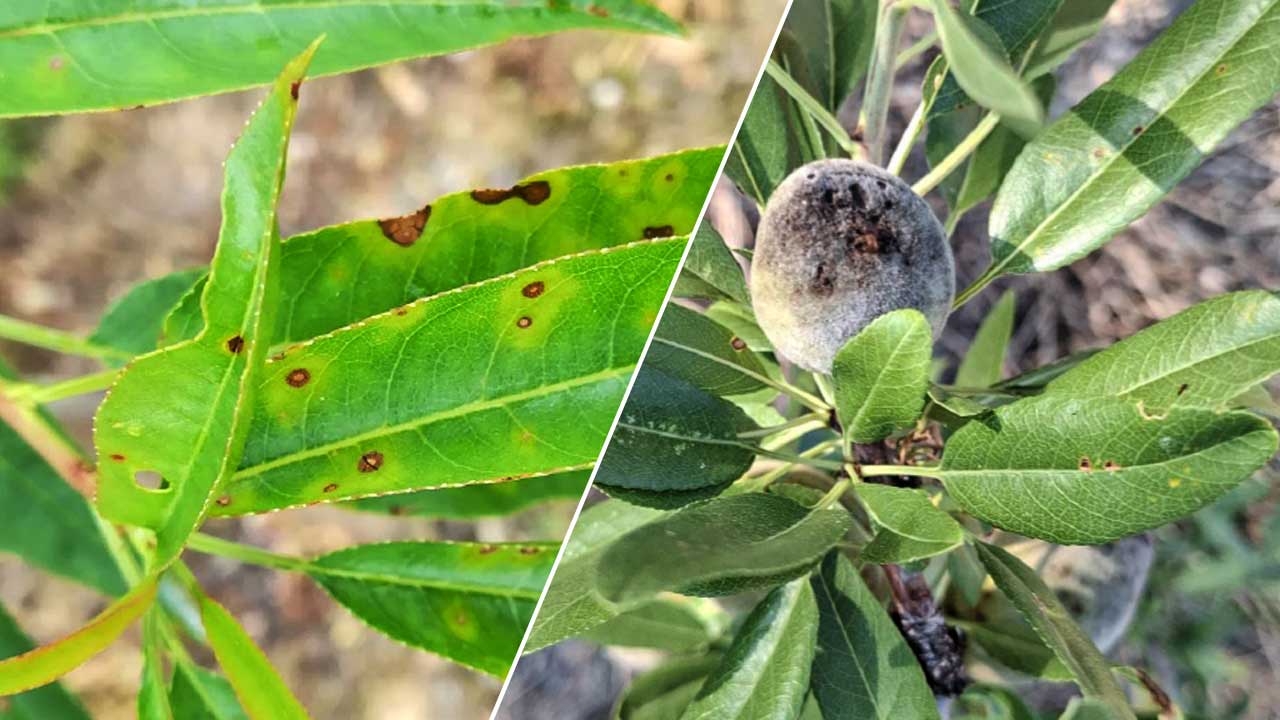
Initial symptoms typically appear on leaves as small, dark, water-soaked polygonal spots, often surrounded by a narrow chlorotic halo. As the infection progresses, these lesions become necrotic and coalesce, leading to yellowing and premature defoliation that progressively weakens the tree’s photosynthetic capacity.
On newly set fruit, the bacterium causes dark, sunken spots accompanied by characteristic gummy exudates. Affected tissue dehydrates and develops raised bumps, which can lead to premature fruit drop and severe commercial depreciation.
Given the lack of curative solutions capable of eradicating the bacterium once it is established inside plant tissue, any agronomic strategy must take a strictly preventive approach.
The critical window for intervention occurs at the end of winter, starting in January and February. During this phase, rising temperatures reactivate the almond tree’s physiology and mark the onset of bloom and budbreak—just as the overwintering bacterial inoculum begins preparing to colonize new shoots.
Against this backdrop, incorporating the biofungicide Fungisei following its recent label expansion offers a high-precision biological tool to halt disease progression from the earliest phenological stages. By acting preventively before optimal infection conditions occur, growers can block the pathogen from establishing itself on susceptible crop organs.
Fungisei is a microbiological fungicide developed by Seipasa and formulated as a suspension concentrate (SC) based on Bacillus subtilis. Its efficacy in controlling Xanthomonas in almond trees lies in its ability to rapidly colonize plant surfaces and build a viable biofilm that prevents the pathogenic bacterium from developing through a triple mode of action.
First, Fungisei exerts direct antagonism through the rapid establishment of Bacillus subtilis, which effectively competes for physical space and available nutrients in the phyllosphere, displacing the pathogen before it can penetrate the plant.
Second, it stands out for its lipopeptide production, as the strain naturally synthesizes families of antimicrobial compounds (such as surfactins, iturins, and fengycins) capable of disrupting and breaking down the cell membrane integrity of harmful microorganisms.
Finally, it promotes induced systemic resistance (ISR), generating a biochemical dialogue between the beneficial bacterium and the almond tree that activates the tree’s endogenous defense mechanisms and primes it against subsequent phytosanitary threats.
The product’s performance in controlling Xanthomonas in almonds can be evaluated from the results of an efficacy trial conducted in Cuneo, northern Italy. Three applications of Fungisei within a preventive strategy confirmed the product’s ability to control the disease and stop its spread.
As Figures 1 and 2 show, disease incidence in both leaves and fruit dropped significantly in plots treated with Fungisei, which also substantially outperformed the biological reference standard used for comparison.
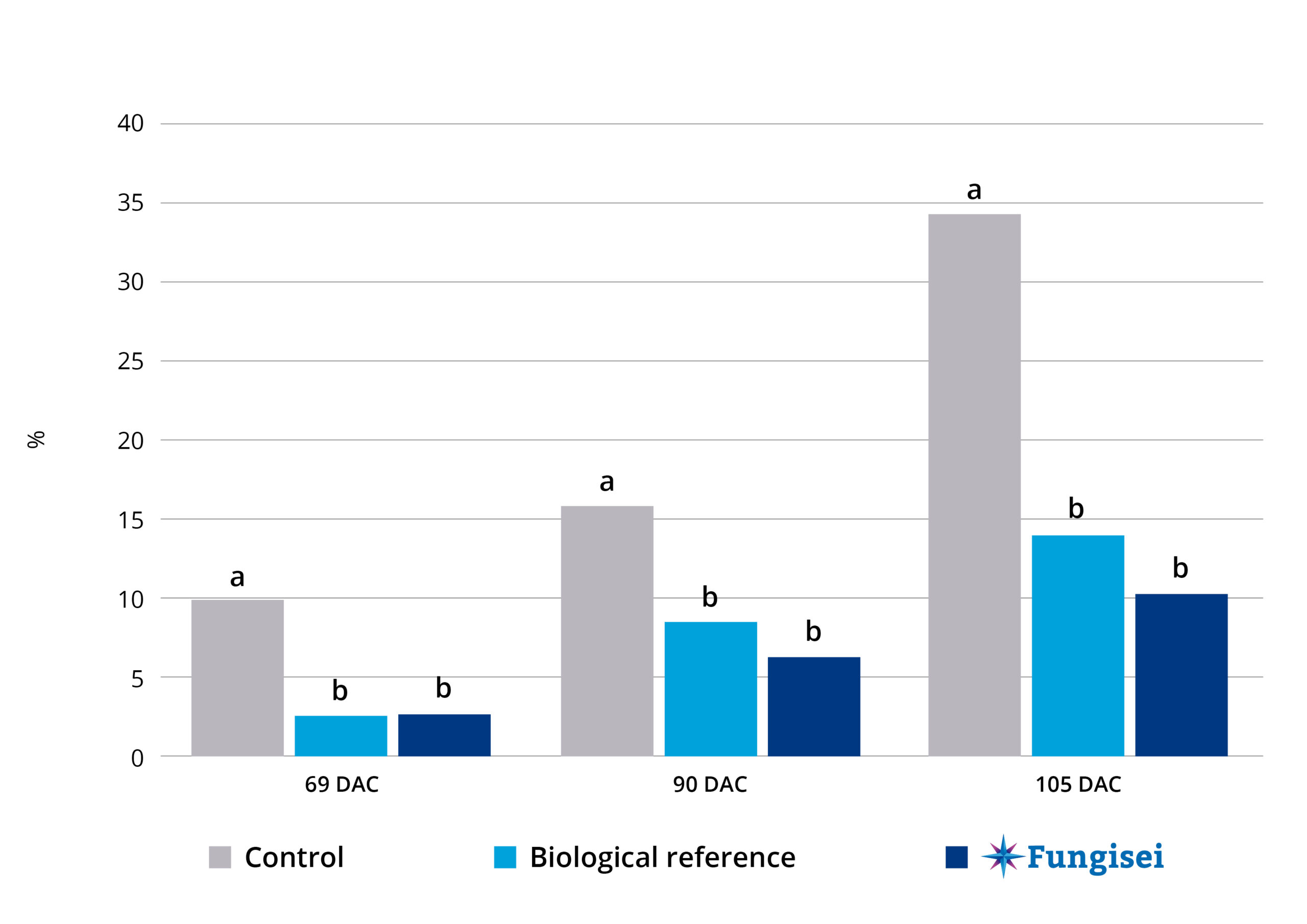
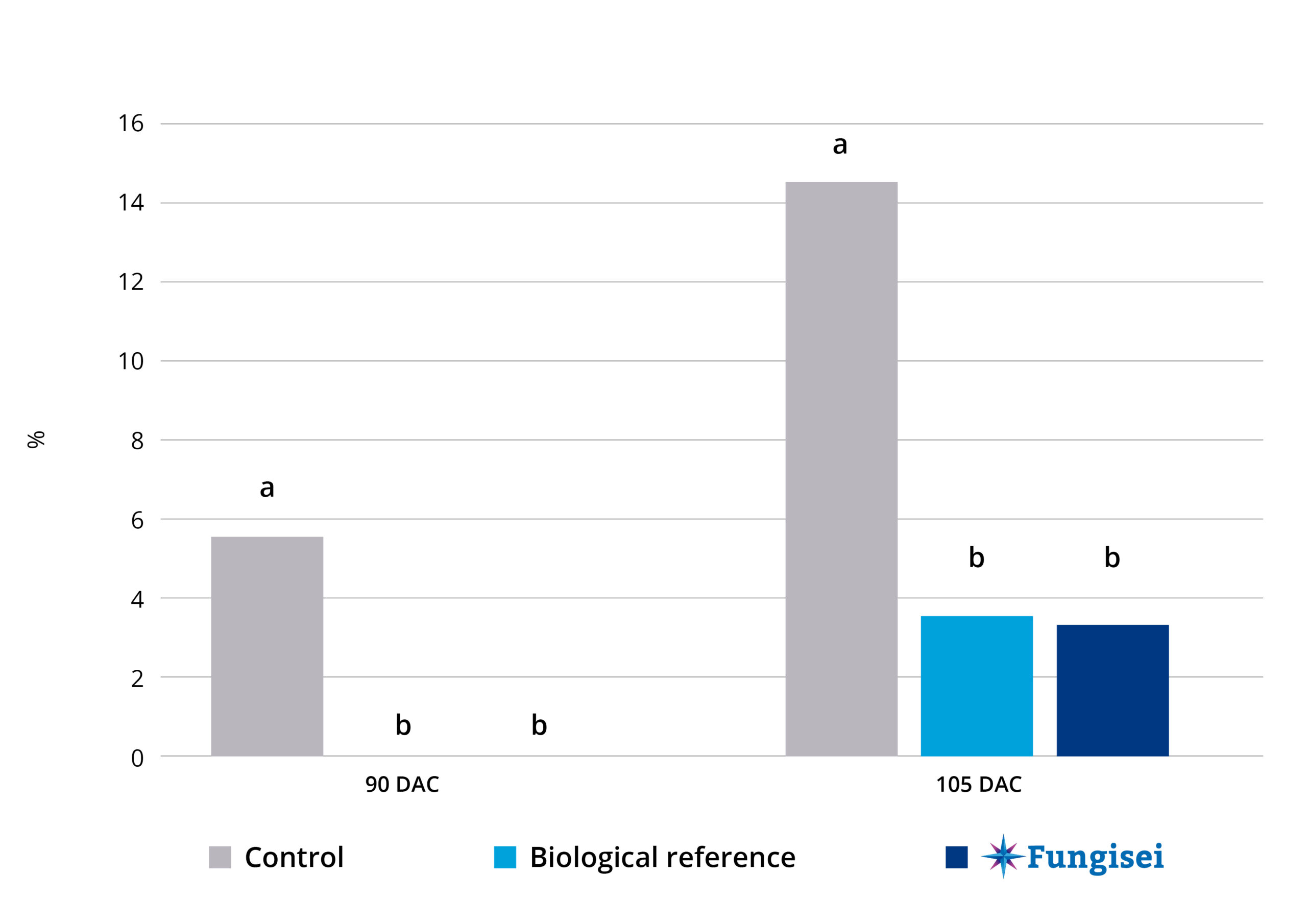
Figure 2. Control of Xanthomonas in almond trees. Percentage of affected fruit (incidence).
Developed using exclusive, patented technology, Fungisei guarantees superior shelf stability of two to three years without phase separation, excellent wettability, and rapid field establishment even under highly demanding environmental conditions.
Fungisei has no pre-harvest interval (PHI) and is classified as a Low-Risk substance by the European Commission. It is a solution that ensures chemical-residue-free harvests, prevents resistance buildup, does not stain fruit, and offers full compatibility with Integrated Pest Management (IPM) programs, organic farming, and tank mixes with copper-based formulations.
To maximize the effectiveness of biological applications, integrated orchard management must rely on a strict protocol of cultural practices that reduce inoculum pressure and discourage a microclimate favorable to Xanthomonas.
In new orchards, it is essential to choose certified plant material from authorized nurseries and prioritize cultivars less susceptible to this disease, particularly in humid areas or low-lying valleys.
Likewise, sanitary pruning and disinfection play a decisive role: branches with cankers or clear symptoms must be removed and destroyed by burning, pruning tools must be disinfected when moving between trees or blocks, and all such operations must always be carried out in dry weather.