



NEXT
Whitefly in solanaceous crops: biocontrol strategies against the most voracious enemy
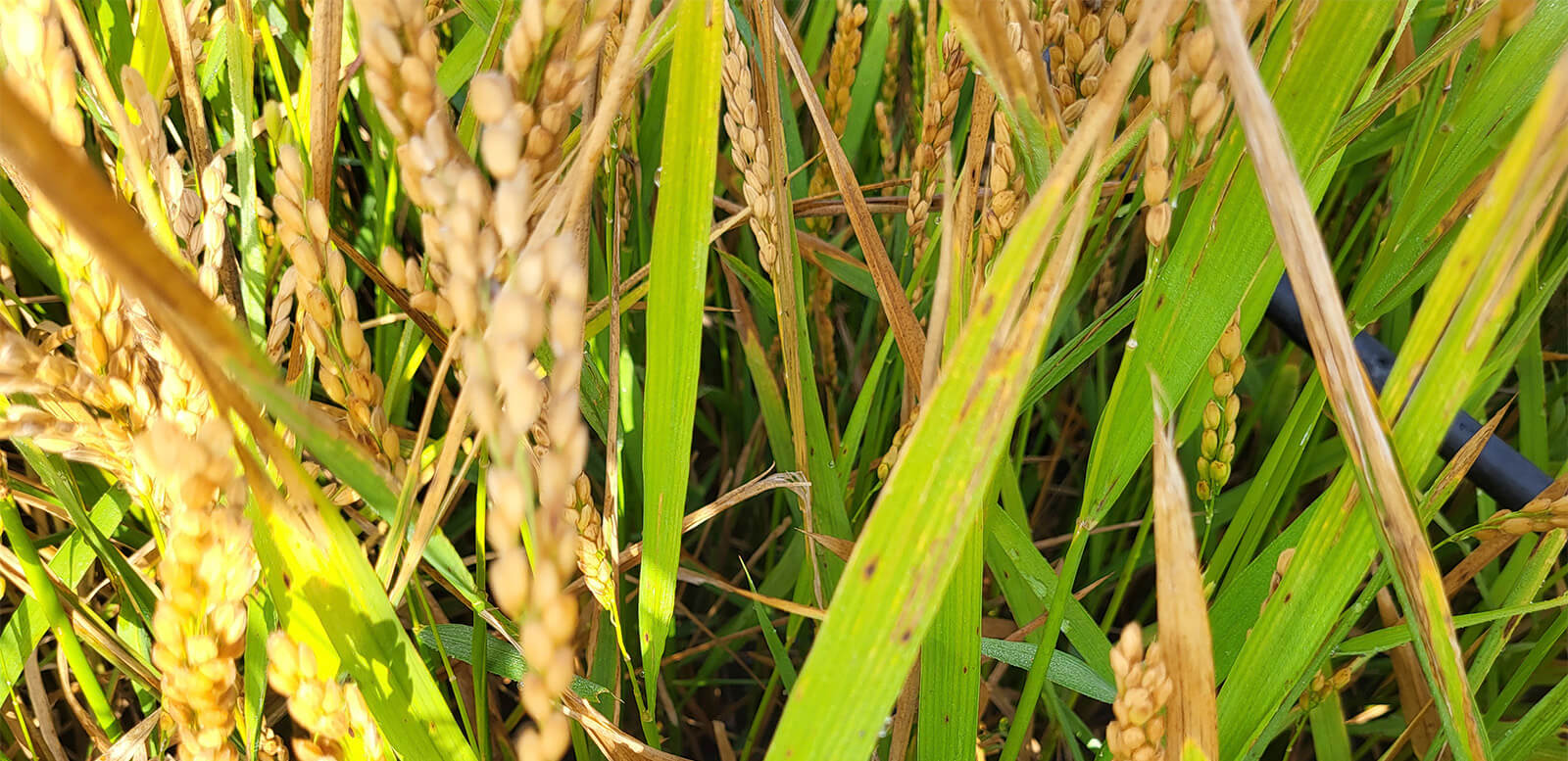
The rice crop repeatedly faces complex phytosanitary challenges, and among the fungal pathologies threatening its productive viability, Pyricularia stands out as the primary yield-limiting factor worldwide.
Understanding its epidemiology and having access to effective, sustainable control tools free from resistance issues is a priority for growers. This is precisely where the role of companies like Seipasa stands out in designing biological control strategies through solutions such as Basei Mg and Carmine for the control of Pyricularia in rice.
Attacks by this devastating fungal disease can occur at any stage of crop development. On leaves, the infection begins with small, discolored, or yellowish spots that rapidly evolve into spindle-shaped or “bird’s-eye” elliptical lesions with brown or reddish borders and grayish centers.
These lesions can escalate into severe attacks, causing premature desiccation of the foliar area and drastically reducing the plant’s photosynthetic capacity.
However, the most critical impact on final yield occurs when the infection reaches the panicle neck, strangling the tissue’s vascular flow and causing floral abortion or incomplete grain filling.
The pathogen’s infection cycle is strongly conditioned by climatic factors, as it requires continuous relative humidity above 90%. It is also driven by the prolonged presence of free water for more than 10–14 hours and a warm environment with temperatures between 20 °C and 28 °C.
The control of Pyricularia in rice is going through a critical moment due to the progressive withdrawal of synthetic chemical active substances and the growing resistance caused by the continuous use of the few available families. This severely limits farmers’ capacity for action and their margin for maneuver in the fight against this pathogen.
To respond to this problem, Seipasa has designed a combined strategy that pairs the fungicidal action of Basei Mg with the biostimulant activity of Carmine.
Basei Mg is a foliar protection tool based on magnesium hydroxide. It acts by contact through an alkaline pH barrier effect that hinders spore germination and surface fungal development, combining preventive and curative action without generating residues or requiring a pre-harvest interval. Furthermore, it is registered for the control of Pyricularia in rice.
On the other hand, Carmine is a biostimulant enriched with an exclusive strain of Bacillus subtilis that activates the plant’s physiological mechanisms and enhances crop yield, helping to keep it strong and healthy throughout the entire cycle.
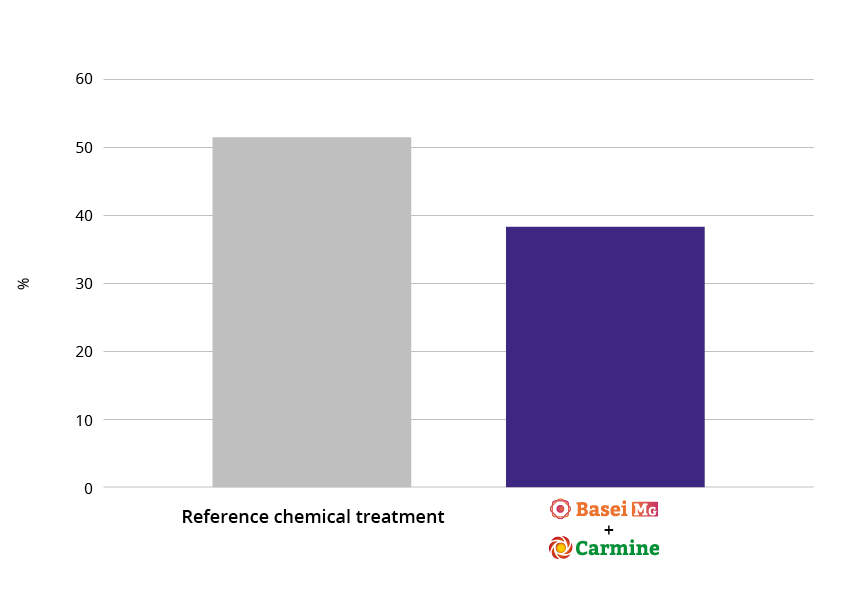
In a trial conducted in the surroundings of the Albufera Natural Park (Valencia, Spain) in collaboration with grower Nando Durá, this strategy was evaluated by applying two passes of the Basei Mg + Carmine combination compared to the farmer’s chemical standard.
The results of incidence on the flag leaf show that the biological strategy kept the disease under control at levels equivalent to the synthetic pathway.
Similarly, in the analysis of panicle incidence, no significant differences were observed between the two strategies. These data confirm that Seipasa’s biological strategy is a high-efficacy alternative for the integrated management of Pyricularia in rice, ensuring crop health without increasing the chemical load.
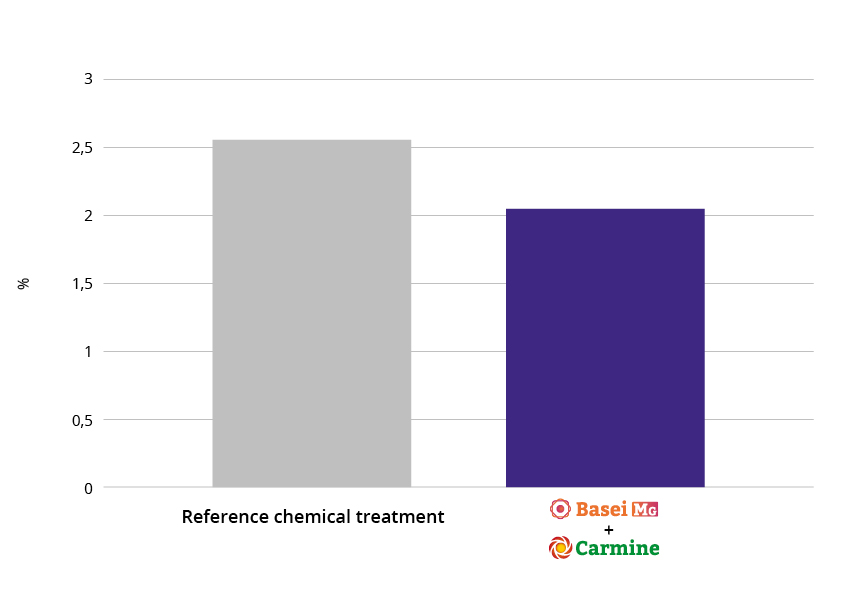
In other words, Seipasa’s biological strategy practically matches the results of the synthesis strategy in controlling the main disease affecting the crop, while obviously eliminating the chemical load and introducing new active ingredients, which also helps reduce the risk of resistance development.